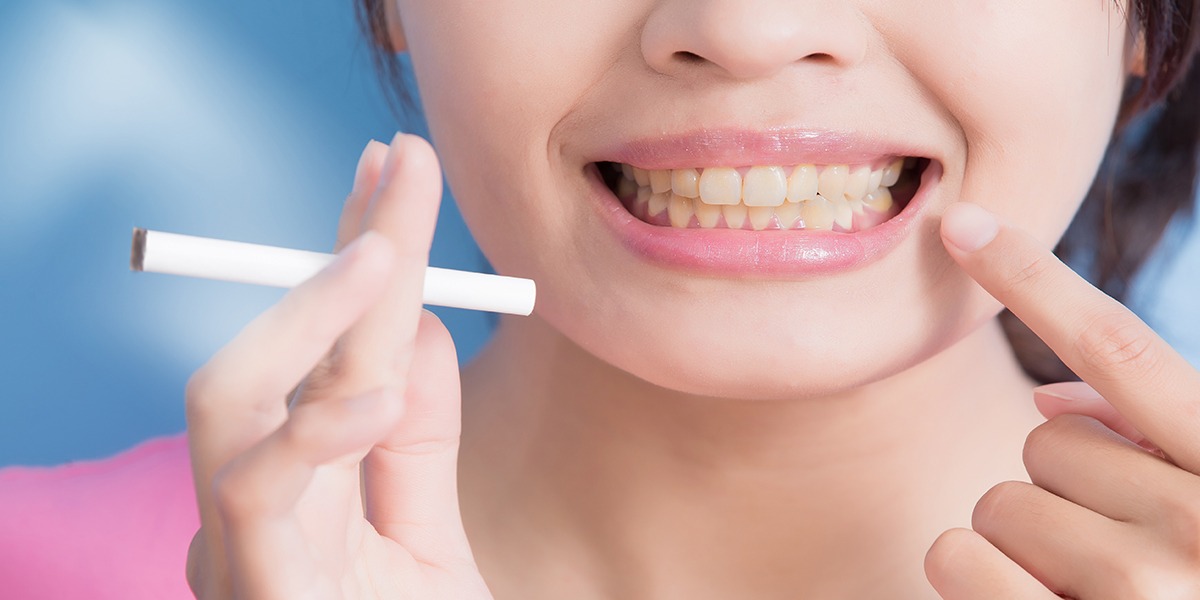
Quitting smoking contributes to a healthy mouth

Did you know that quitting smoking can contribute to a healthy mouth? Of course, you know that smoking can give you lung cancer and cardiovascular disease. Less well known is the impact of smoking on oral health. Among other things, smokers are more likely to develop gingivitis than non-smokers. As early as two to six weeks after quitting smoking, the positive effect is visible in your mouth.
Harmful substances
Smoking releases all kinds of harmful substances, including tar and nicotine. Tar is the main element in the development of cancer. Nicotine enters the bloodstream quickly and has a direct effect on the body. Nicotine constricts blood vessels, speeds up the heart rate and increases blood pressure. The activity of immune cells in the blood decreases. The effects of smoking extend not only to the heart and lungs. All tissues that come into direct contact with tobacco smoke can be damaged.
Smokers tend to have more plaque and tartar than non-smokers
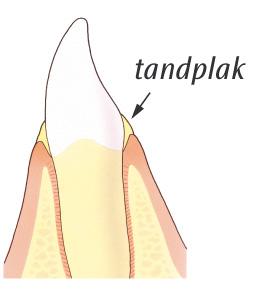 Dental plaque is the cause of inflamed gums
Plaque forms on and between your teeth and on the transition to the gums. This barely visible white-yellow layer consists of bacteria and products of bacteria. Plaque that is not removed can harden and calcify into tartar. New plaque easily adheres to tartar. Plaque is the cause of inflamed gums. Inflamed gums are painful and bleed when touched, for example with a toothbrush. Smokers tend to have more plaque and tartar than non-smokers. Thus, more chances of gum inflammation. Moreover, gum inflammations are often more severe in them and their treatment usually does not catch on as well.
Why do smokers' gums bleed less?
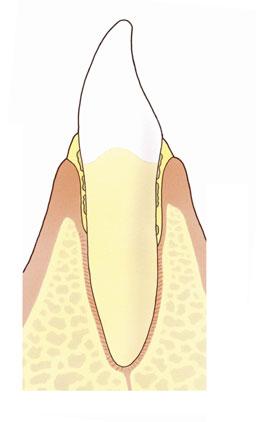 Periodontitis
Nicotine constricts blood vessels in the gums. Thus, smoking suppresses the symptoms of gum inflammation. The inflamed gums of smokers bleed less quickly than those of non-smokers. Therefore, gum infections in them are harder to detect. The narrowing of blood vessels also reduces blood flow to the gums. As a result, the defence against bacteria in the plaque decreases. Smoking also negatively affects wound healing.
Losing teeth
With inflammation, the number of blood vessels in the gums normally increases and widen. The gums turn a red colour, swell and bleed easily when you brush your teeth or eat. In smokers, this hardly ever happens. Therefore, inflammation in them is easily overlooked. As a result, it can spread almost unnoticed and even affect the jawbone. Smoking thus causes gum inflammation to heal slower and the jawbone to shrink further. Smokers are therefore more likely to lose their teeth than non-smokers.
Smoking and implants
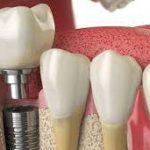
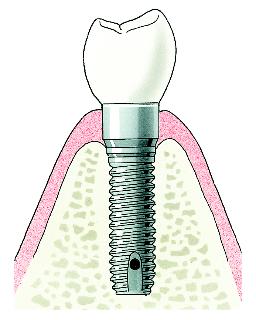 An implant with crown
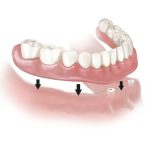
An implant is an artificial root fixed in the jawbone. It is used to replace lost teeth. A crown, bridge or prosthesis is placed on the implant. After the implant is placed, the gums close around it nicely. The implant should be well fixed in the bone. Smokers are almost three times more likely to fail than non-smokers. Many dentists are therefore reluctant to recommend implants in smokers.
The inlvoed of smoking on discolouration
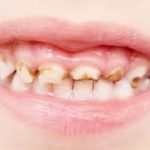
Smoking can discolour your teeth, molars and filling materials. You can compare smoke stains to those from coffee or tea. Smoke deposits are just much harder to remove. Smoking also makes keeping dentures clean more difficult.
Do smokers smell and taste good?

Smokers do not smell and taste as well as non-smokers. Smoking is also one of the common causes of bad breath. Stopping smoking will quickly reduce these effects.
Smoking and oral cancer
Smokers are at higher risk of developing abnormalities in the tissues of the mouth, tongue and throat that could potentially lead to oral cancer. In fact, they are two to four times more likely to develop cancer in the oral cavity. Those who smoke and consume alcohol in the process are at additional risk.
Smoking cessation and oral health
As early as two to six weeks after quitting smoking, the beneficial effect is visible in your mouth. The condition of your gums will not deteriorate further. Gum treatment results will also be better. Gum bleeding may increase temporarily after quitting smoking. Good oral hygiene will ensure that this problem disappears quickly. Your dentist or dental hygienist can help you with this. To quit successfully, it is important that you are well motivated yourself. Have you decided to stop? Congratulations! You are more likely to succeed if you use an aid. More information can be found at www.rokeninfo.nl or call 0900 - 1995 (€0.10 per min).
Want to know more?
Then download the free GezondeMond app. The app is available for Android and tablets, available via Google Play. The app for iPhone and iPad can be found in the iTunes App Store..


<< Back© Ivory Cross