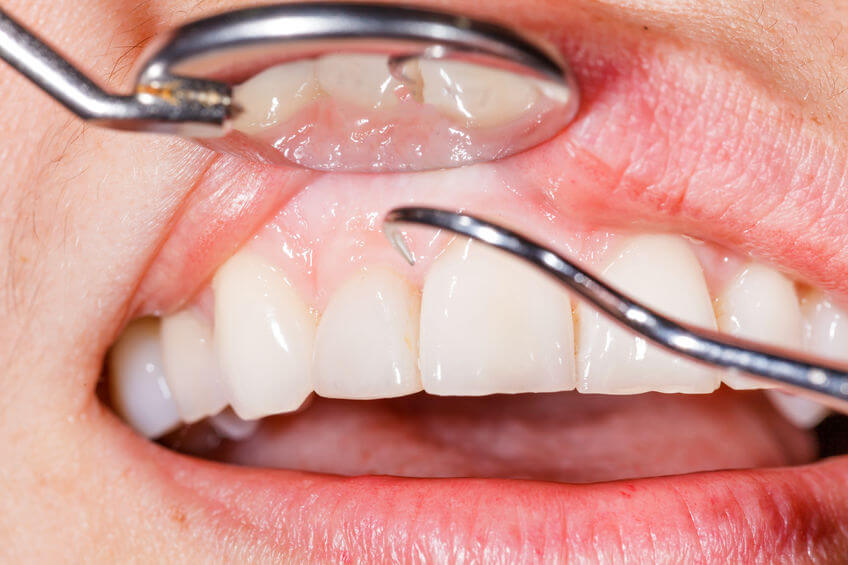
Retracted gums
In a healthy mouth, the gums lie neatly around the teeth. Sensitive necks only occur when the gums are receding. Without receding gums, this sensitivity is not possible. Once gums have receded, they do not return.
Exposed dental necks
Pain when eating or drinking hot or cold products? Or especially when you take something sour or sweet? Most likely, exposed dental necks are the problem. When the gums recede, the neck and root of the tooth become exposed. There is no enamel on the neck and root of the tooth. This makes the tooth very sensitive to influences such as hot, cold, sweet and acid. Cavities also develop easily in the exposed part. Proper brushing and a good diet are very important to address sensitivity.
What causes gums to recede?
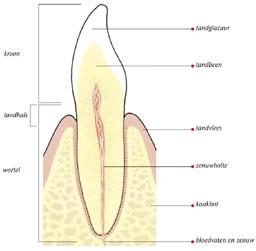 Cross-section tooth where gums have recededIf you brush too vigorously, for too long, with too much pressure or with a hard toothbrush, you can literally brush away your gums. Inflamed gums (periodontitis) are also a cause of gum recession. Inflamed gums are caused by poor oral hygiene.
Inflamed gums
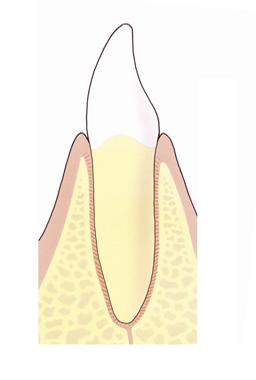 Healthy gums
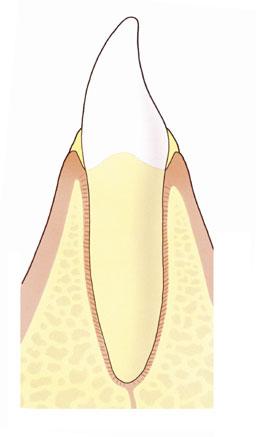 Gingivitis
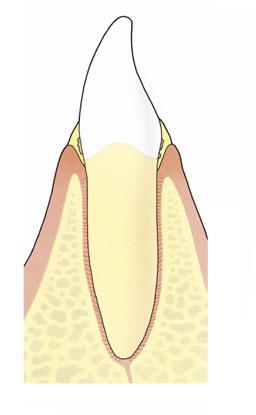 Tartar
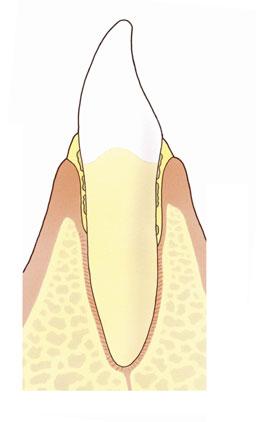 Periodontitis
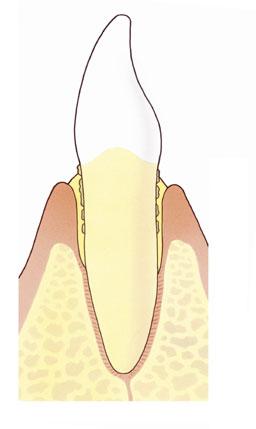 Retracted gums
Inflamed gums can lead to receding gums.
Healthy gums are pink, tight around the teeth and do not bleed when you brush your teeth.
Red, swollen or bleeding gums usually indicate inflamed gums. Dental plaque on the transition from your gums to your tooth and plaque trapped between your teeth cause inflamed gums. This stage is called gingivitis.
If you don't remove plaque properly, the bacteria in it cause your gums to become further inflamed. Plaque that is not removed calcifies into tartar. New plaque easily sticks to tartar.
Between the tooth and the gums is a small space (pocket). As inflamed gums become detached from the teeth, that space deepens. The inflammation in the gumline can spread towards the jawbone. This causes the gums to loosen even further. The inflammation destroys the fibres and breaks down the jawbone. Result? Even deeper pockets. In these, plaque partly calcifies into tartar. This progressive inflammation with destruction of fibres and jawbone is called periodontitis.
Inflamed gums have caused the teeth to loosen and the gums to recede. The root is partially exposed. Periodontitis can be treated, restoring healthy gums. Once receded gums do not return.
What causes pain in sensitive dental necks?
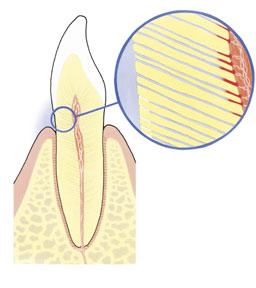 Stimuli can move the fluid in the open channels and thus irritate the nerve
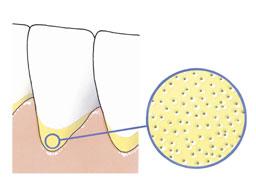 Dentin contains channels that connect to the nerve cavity inside the tooth or molar Teeth and molars consist of a crown and one or more roots. The crown is the part you see and has a strong layer of enamel. The roots cannot be seen and have no enamel. Once the gums recede, a piece of the tooth without enamel is thus exposed. This porous material is dentin. Dentine contains canals that are connected to the nerve cavity inside the tooth. If the gums close the canals, you will not notice anything. When the gums are gone, hot, cold, sweet or sour stimuli cause the fluid in the canals to move. This movement irritates the nerves and thus causes the pain.
How can you prevent tooth sensitivity?
Good oral hygiene can prevent dental sensitivity. If you do not brush too vigorously and make sure your gums do not become inflamed, you will not have to deal with this. That means removing all plaque from and between your teeth every day. Therefore, brush your teeth twice a day with a fluoride toothpaste. A good brushing takes two minutes, is done carefully, not too vigorously and with a soft toothbrush. Also clean the spaces between your teeth daily with toothpicks, brushes or dental floss.
What can you do yourself against sensitive teeth?
Brushing correctly
Since exposed dental necks and roots are not protected by enamel, caring for them is extra important. Not only to prevent root cavities, but also to minimise sensitivity. So, even in pain, keep brushing. When you brush with toothpaste, you apply a protective layer to the teeth. This makes it harder for stimuli to reach the nerves in the tooth. Result? Less pain! But acidic liquids easily wash away this layer. So then the pain returns. Sometimes rinsing with a fluoride rinse can also help. Check with your dentist or dental hygienist.
Changing diet
To reduce sensitivity, it may be important to change your diet. For example, do you drink a lot of juices or soft drinks (acidic) or eat a lot of citrus fruit? If so, the unprotected dentin wears away easily. The entrances to the canals widen. As a result, the stimuli easily pass through the dentin. Therefore, limit the number of eating and drinking occasions to a maximum of seven times a day. Choose three main meals and a maximum of four snacks in between. Eat acidic fruit once or twice a day at most, and drink soft drinks and other acidic drinks in moderation. Do not eat or drink acidic products one hour before brushing your teeth. Acids make dentin weaker, making it easy to brush away. If you don't change your diet, the sensitivity may not be treated and get progressively worse.
What can the dentist do about tooth sensitivity?
The dentist or dental hygienist can only work with you to address the sensitivity. Depending on the cause, you will need to improve your oral hygiene, change your way of brushing or change your diet. The dentist can apply a varnish with extra fluoride. This treatment works temporarily. For severe symptoms, the dentist can apply a filler, such as composite, to the exposed necks. The application of this must be done very carefully. The treatment is often not painless and is therefore often done with a local anaesthetic. The dentist has to blow the tooth dry and apply a cold liquid.
Are there toothpastes that help against tooth sensitivity?
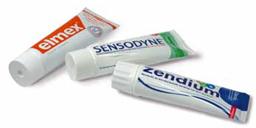 Use a non-abrasive toothpaste
As soon as you brush your teeth and dental necks with toothpaste, you apply a protective layer. This may block the passage in the dentin to the nerve cavity. Then the sensitivity may temporarily decrease slightly. Some toothpastes are specially designed to combat sensitive dental necks. Many patients benefit from using them. But the results are not always successful. The benefits of the toothpaste can be negated by your eating or drinking habits (acid) or by the grinding effect of toothpaste. All toothpastes have different effects. Therefore, try different toothpastes against sensitive teeth.
Monitoring and guidance for sensitive teeth
Discuss your dental sensitivity with your dentist or dental hygienist. Agree on the frequency of your visits for check-ups and guidance. Do you have any further questions? If so, contact your dentist or dental hygienist.
Want to know more?
Then download the free GezondeMond app. The app is available for Android and tablets, available via Google Play. The app for iPhone and iPad can be found in the iTunes App Store..