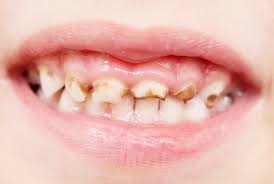
Cheese teeth
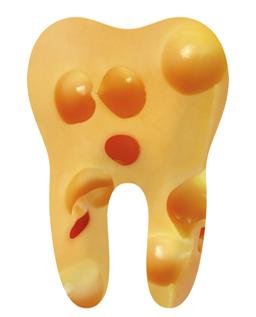
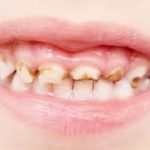
Does your son or daughter complain of sensitive molars? Does your child eat poorly? Does brushing teeth hurt? Maybe cheese teeth are involved. These are molars whose protective enamel layer is not developed or not well developed. They are partly or completely cheese-coloured (white-cream to yellow-brown) and can also look a bit lumpy. They are more sensitive than other molars because the outer layer is weaker. Cheese teeth occur in both milk teeth and permanent teeth.
More holes
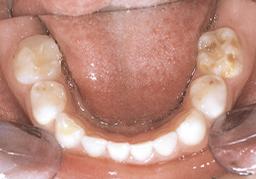
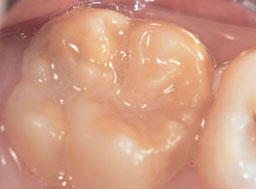
Children with cheese teeth have more cavities than peers without cheese teeth. Does a child have cheese teeth in his milk teeth? Then it has a higher chance of developing cheese teeth in its permanent teeth. In the Netherlands, 5-9% of children have cheese teeth in their milk teeth. In permanent teeth, 9-14% of children have one or more cheese teeth. Children with cheese teeth in the permanent teeth, are also at risk of white-yellow discolouration of the permanent front teeth.
Enamel disorder
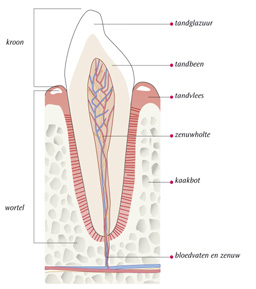
Dental enamel is the outer protective layer of teeth. Enamel is the hardest tissue in the human body. Something can sometimes go wrong in its formation. Milk teeth are already formed before the child is born. So pregnancy is also an important period for the child's dental development. The development of the milk teeth continues until they erupt around the age of two. If something goes wrong during this period, abnormalities in the enamel of the milk teeth may occur. Too little enamel may have formed or the enamel may be of poor quality. Enamel development of the first permanent molars and incisors in the upper jaw also begins shortly before birth and continues in the first 4 years of life. The cause of disturbed enamel formation in the permanent molars and front teeth lies during this period.
What causes cheese teeth to form?
Enamel defects can be hereditary. It is also known that maternal alcohol consumption during pregnancy, low birth weight and fever in the child in the first year of life can cause cheesy teeth in the baby's milk teeth. Sometimes the cause is also unknown. Has your child been sick often in the first 4 years of life? That may be the cause of the disrupted enamel formation in the permanent molars.
Which molars are prone to cheese teeth?
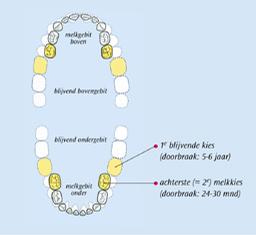
In milk teeth, the last (back) molars to erupt are the most prone to developing enamel defects. They appear when your child is between 2 and 2½ years old. In permanent teeth, it is precisely the first molars that break through. They appear when your child is between 5 and 6 years old. These first permanent molars break through behind the last deciduous molars, so they easily go unnoticed. So pay close attention when (re)brushing.
Do cheese teeth hurt?
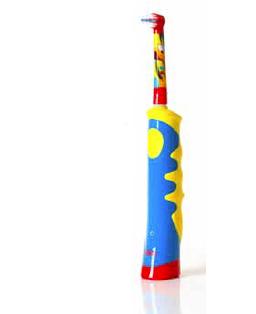
Cheese teeth are sensitive and fragile. The enamel is of inferior quality. As a result, the tooth wears down more quickly. Thus, cavities can develop more quickly. Within a short time, large parts of a molar can be affected or crumble. Cheesy molars can hurt. Many children avoid sensitive molars when brushing their teeth. This makes cavities and sensitivity even more likely to occur. Cheese teeth are not protected or poorly protected from external attacks. Eating or drinking hot, cold, sweet or just sour products can be painful.
Can you protect cheese teeth?
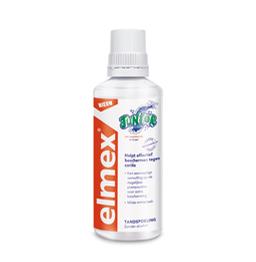
Cheese teeth can be given extra protection with fluoride. Brushing teeth properly is the best way to apply fluoride daily. So it is very important to brush your teeth properly twice a day. Also in case of sensitivity. The dentist or dental hygienist may advise your child to brush teeth an extra time and/or rinse with a fluoride mouthwash. Be extra vigilant about (permanent) molars breaking through. Make sure your child regularly visits the dentist or dental hygienist. Then he can check your child's teeth properly and give advice.
What does the dentist do about cheese teeth?


It is important that the dentist or dental hygienist can spot enamel disorder early. When the first tooth breaks through, take your child to the oral care practice. The dentist or dental hygienist can minimise the effects of enamel disorder and the development of cavities. Does your child have cheese teeth in his milk teeth and are the first permanent molars coming through? Then the oral health care provider will call your child for check-ups more often. In cheese teeth that are detected early, you can achieve a lot with good tooth brushing and proper fluoride use. The oral care practitioner checks and cleans the teeth and can give extra protection to vulnerable molars with a fluoride varnish, for example. In many cases, the practitioner will fill the cheese teeth with a tooth-coloured material. More severe cases, for example, he may fit them with a metal crown. Attacks from outside can then no longer reach the inside of the molar. In some cases, the dentist has to extract cheese teeth.