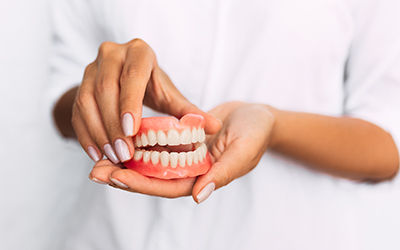
A new eye-catcher
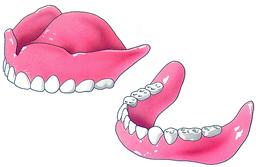
Teeth are important for chewing, speaking and appearance
New dentures are a big change. Your new dentures play an important role in chewing and speaking. Moreover, your artificial teeth are very important for your appearance. After all, your teeth are your first look.
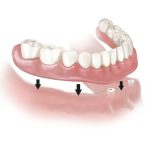
See also overdenture.
Getting used to your new dentures
 Start with soft food for the first few days.
Your new dentures probably won't sit comfortably right away. It is new and, above all, different. And you will definitely have to get used to it. Especially in the beginning, you will experience some problems. Your dentist or prosthodontist* will guide you through the difficult initial period so that you will get used to your new teeth as quickly as possible. Return to your practitioner for follow-up and periodic checkups.
* We refer to this as practitioner for short.
NB. This may be a dentist or a prosthodontist. A prosthodontist is a dental technician who specialises in making dentures.
Appearance
Especially when you look in the mirror, you will have to get very used to it. Your upper lip may be a little ‘fuller’ and your face a little less sunken. After all, your mouth is an important eye-catcher. You and people around you will have to get used to your new appearance.
Food
Eating with your new dentures will be a bit uncomfortable. Especially in the beginning, you will be careful. You will find out for yourself what you can and cannot do. For the first few days, try soft foods such as mashed potatoes, minced meat and soft fruit. A few days after that, try a piece of fish and a potato. Again later you can eat foods like meat or an apple. It is better not to bite off pieces with dentures. Therefore, cut your food into pieces and chew slowly and evenly with the false teeth. When doing so, take a piece of food into your mouth on both sides. Take a little more time than you were used to.
Talking
At first, you may find it a little awkward to speak with your new dentures. You may lisp, for example, or certain sounds may sound different than you are used to. It is as if you are speaking with a full mouth. This is normal. Your mouth still needs to get used to your new dentures. It usually gets a lot better after a few days. Practise extra with those words or letters that don't sound quite right yet. For example, read the newspaper aloud.
Pain from new dentures
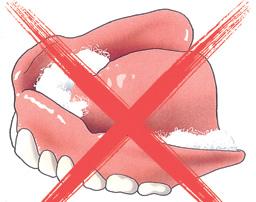 Never tinker with your dentures yourself, take them to your practitioner
Wearing your new dentures can be painful at first. It is tight against your jaws. In some places, perhaps a little too tightly. This can cause sensitive, so-called pressure points. By making small and simple corrections to your dentures, your practitioner can take away this pain. Never file or sand down your dentures yourself!
For good results, it is important to keep your dentures in your mouth. Try to talk and eat with it immediately. The practitioner will check your dentures a few days after they have been placed. Have you decided to take out your dentures anyway because of pain or discomfort? Then put it back in at least half a day before going to the practitioner. Otherwise he will not be able to recognise all the painful areas. Do not be tempted to put your old dentures back in. You will then obviously not get used to your new ones. With your new dentures, it is often a matter of perseverance!
Cleaning your dentures
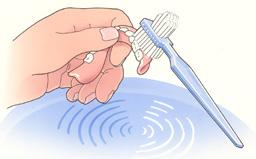 Clean your teeth after every meal
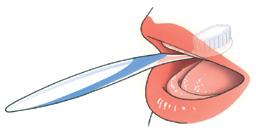 Clean your palate too
Your dentures are still new and beautiful now. Of course, you would like to keep it that way. Therefore, just as with your own teeth, you should take care of your dentures. If you don't clean them regularly, food residue will remain. Both on your dentures and underneath them. If you do not remove them, your gums may eventually become inflamed. Therefore, clean your dentures carefully after every meal. Use a special denture brush, e.g. from Lactona or Oral-B, and water to remove food residues properly. Do not use toothpaste. It can be too abrasive. Clean dentures always feel smooth. Do not let the smooth denture slip out of your hands during cleaning. It will break. To be safe, fill the basin with water first and clean your dentures above it.
Clean your dentures daily with a cleanser available at the drugstore or pharmacy. When doing so, follow the manufacturer's instructions. If necessary, ask your practitioner or dental hygienist for advice. In any case, place your dentures in a cleanser overnight once a week. This will prevent tartar from forming on your dentures. Afterwards, brush your dentures well and rinse them with water. Never put your dentures in hot water and definitely do not use bleach or abrasives.
Clean your mouth too
Clean not only your dentures, but also the mucosa on which your dentures rest: your jaws, palate and the transition from the jaw to the cheeks. Otherwise, nasty inflammations can occur. And again, prevention is better than cure. Massage the mucous membrane at least once a day with a soft toothbrush and pay extra attention to your palate. Use a regular fluoride toothpaste to clean your mouth.
Take off your dentures at night
When you go to sleep, your jaws also need a rest. Therefore, take off your dentures when you go to bed. This is better. Do you hate sleeping with an empty mouth? Then only take off your lower dentures. Do you still want to wear your entire denture day and night? Then have your mouth and dentures checked by your dentist at least once a year.
Don't have the dentures in your mouth? Then keep it in a glass of water. Change the water every day. You can also keep your dentures in a glass filled with detergent. Always rinse the dentures well with water before placing them back in your mouth.
Once dentures, done forever?
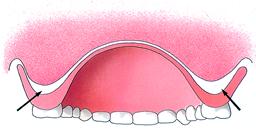 Your jaws shrink, causing your dentures to become loose.
Over time, you will get used to your new artificial teeth. So well, in fact, that it seems like they have always been there. But they don't stay that way. Your mouth changes because your jaws shrink. However, your dentures remain the same size. So space develops between your dentures and your jaw, causing your dentures to loosen over time. If your dentures no longer fit properly, they may press harder in some places on your jaw than others. This can cause pain. If this happens, see your practitioner. Do not sand or file your dentures yourself! In such cases, your practitioner will adjust your dentures. He can put a new layer or ‘lining’ in your dentures, making them firmer again.
Monitoring by the practitioner is important
To prevent pain and to detect any loosening of your dentures in good time, it is advisable to visit your practitioner at least once every two years. Go even if you have no complaints. The shrinking of your jaws is very subtle. You will not notice it at first. Your practitioner can make your dentures fit properly again. Or he can advise you to get new ones in good time (usually after about ten years), because dentures can also wear out. The practitioner will also check whether your mouth is still healthy. People with poorly fitting dentures or people who have been wearing their dentures for many years are particularly prone to developing unpleasant oral abnormalities.
Adhesive pastes, adhesive powders and other aids
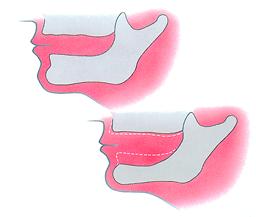 The shrinking of your jaws happens very imperceptibly.
There are all kinds of adhesive pastes, powders and ‘liners’ on the market to give dentures more grip. These products are actually all temporary solutions. They do not really address the root cause of the problem. Never put cotton wool under your dentures. This will only cause your jaws to shrink more quickly. Are your dentures becoming loose? Then visit your practitioner. They will usually see immediately what the problem is and can give you the best advice.
Want to know more?
Then download the free GezondeMond app. The app is available for Android and tablets, available via Google Play. The app for iPhone and iPad can be found in the iTunes App Store..