
Always bleach your teeth under the supervision of your dentist or dental hygienist
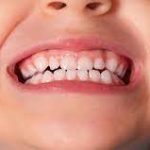
White and radiant teeth. Who doesn't want that? Beautiful white teeth are popular and the offer to get them is huge. The advertisements promise snow-white teeth, often even within an hour. Whitening teeth using bleaching treatments is possible in many cases, but certainly not always. Unsafe bleaching processes can damage your mouth. European legislation was therefore amended in 2011. Since then, aggressive bleaching agents are no longer allowed. Are you considering a bleaching treatment? Discuss your wishes and the possibilities with your dentist or dental hygienist.
The colour of your teeth
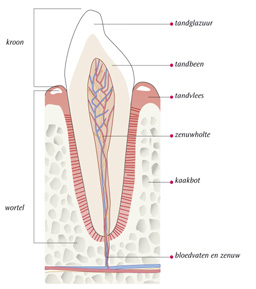
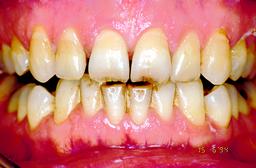
The colour of teeth is different for everyone. Some have whiter teeth than others. Some have yellow, others even brown or grey teeth. Teeth and molars are not all the same colour and sometimes differ markedly from each other. Teeth and molars are made up of dentine and enamel. The colour and thickness of the dentin mainly determine the colour of the tooth. The enamel of teeth is almost transparent and slightly white.
The canine teeth have a thicker layer of dentin than the other teeth and are therefore often significantly yellower. Your teeth get darker as you get older. This is because the formation of dentin always continues. Instead, the enamel layer becomes thinner due to wear and tear.
What causes teeth to darken?
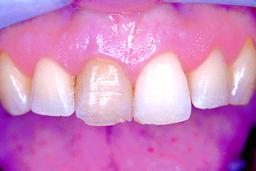
When dyes from food and stimulants enter the tooth, the teeth look darker. This happens by eating and drinking coffee, tea, wine, soft drinks, fruit juice, food containing colouring agents (such as fruit jam) and smoking, among other things. Cracks can appear in the enamel. As a result, dyes from food and drinks penetrate the tooth even more easily.
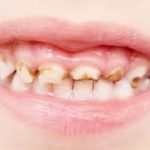
Tartar deposits and discolouration can also darken teeth. These external discolourations are also caused by coffee, tea, wine and smoking. Furthermore, some oral hygiene products can cause discolouration. Deposits can be removed by the dentist or dental hygienist with a professional dental cleaning. Bleaching is not the solution.
Dead teeth (usually due to a fall or blow or root canal treatment) can discolour from within. In exceptional cases, during the formation phase, diseases or medications can cause discolouration.
White teeth, for me too?
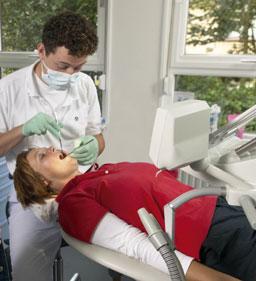
Have the dentist or dental hygienist assess your teeth first. He should determine that your teeth are healthy and free of cavities and your fillings are in order. Then he will look at the colour of your teeth. Is there any discolouration? What is the cause of it? Do you have many fillings, crowns or bridges in your mouth? Is tarnish the cause of the discolouration? Is the result you envision realistic? Bleaching is not always the only or best solution. Fillings, crowns and bridges do not discolour and can become visible in a distracting way after bleaching. Your oral healthcare professional will advise whether bleaching makes sense for you and what the result will be.
Bleaching methods
Bleaching from within for ‘dead’ teeth
First, the dentist makes an opening at the back of the tooth. In this, he applies a poultice containing the bleaching agent. This poultice has a bleaching effect for several days. Depending on the result obtained, the dentist repeats the treatment one or more times. Finally, he seals the tooth with a final filling. The bleaching agent used for this purpose for a long time has been withdrawn from the market under the influence of European regulations. Whether the alternative agents are as effective is still being investigated.
External bleaching for healthy teeth
Home bleaching under the supervision of the dentist or dental hygienist
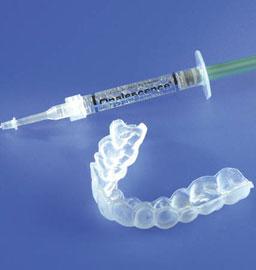
Even, not too severe discolouration can be bleached externally. This is done using a bleaching tray. First, the dentist or dental hygienist takes an impression of your teeth. With this, the dental technician in the dental laboratory makes a bleaching tray of a soft transparent plastic, which fits precisely over your teeth and leaves space for the gel. This is important, to prevent gum irritation. The bleaching spoon is the mould you use to apply the bleaching gel to the teeth. The gel contains 3 to a maximum of 6% of hydrogen peroxide. After proper instruction on how to apply the gel and when to wear the bleaching tray, you are given the bleaching tray and some syringes of bleaching gel to take home. This is why this method is also called ‘home bleaching‘. The dentist will specify how long you need to wear the bleaching tray with the gel (usually overnight) for the desired results. Depending on the discolouration, you will see effects after a few days or weeks. Ultimately, the treatment takes two to three weeks. During bleaching, your teeth and gums may become temporarily sensitive. Consult your dentist or oral hygienist if this complaint occurs and ask for appropriate instruction.
Research shows that the home bleaching method under the guidance of the dentist or dental hygienist is the most effective and durable.
Bleaching in oral care practices or bleach shops
Some oral care practices and bleach shops offer an accelerated bleaching treatment. Sometimes they use a lamp to heat the gel to speed up the process. It is not clear whether this actually gives better results. Due to the change in legislation, concentrations of hydrogen peroxide higher than 6% are no longer allowed. Therefore, it is impossible to achieve the same result as with the home bleaching method in one go. Alternative bleaching materials are also being experimented with. Research on the results with these new materials is not yet available.
Questions and answers about bleaching
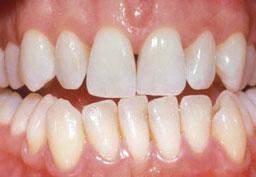
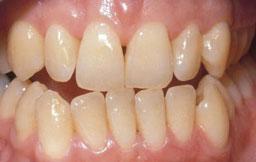
What happens to your teeth when you bleach them?
Bleaching usually involves the use of hydrogen peroxide. The peroxide bleaches discolourations. In addition, the bleaching agent temporarily dries the teeth and makes them slightly more porous. This temporarily makes the enamel less transparent and you see the dark dentin less.
How long does a bleaching treatment last?
The length of a bleaching treatment depends on the bleaching method. With the at-home bleaching method, it usually takes two to three weeks to achieve the desired results. The tooth colour always darkens slightly after finishing the bleaching treatment. After six weeks, you can only see the real bleaching result.
Can you whiten all teeth?
During a bleaching treatment, fillings, veneers (a shield made of porcelain or composite), crowns and bridges do not colour. So a bleaching treatment for those teeth is pointless. They may even stand out more after bleaching. So consult your dentist or dental hygienist before bleaching your teeth. Discuss your wishes and ask whether your desired result is feasible.
Is home bleaching under the supervision of the dentist or dental hygienist harmful to my teeth?
Research has shown that immediately after bleaching, the outer part of the enamel is temporarily slightly more porous and less hard. The effect is similar to damage to a tooth that has been in contact with soft drinks for some time. These changes to the enamel recover, once the enamel comes into contact with saliva. Home bleaching under the guidance of the dentist or dental hygienist, if you follow the instructions, has no permanent adverse effects and produces the best results.
Can I eat and drink anything during the bleaching treatment?
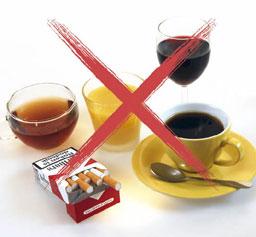
Bleaching makes the enamel of the teeth slightly more porous. This effect is temporary. The enamel repairs itself again. During treatment with the bleaching spoon, certain foods and drinks may adversely affect the result. So, what caused the discolouration? During the bleaching treatment, the use of these products, as well as smoking, is not recommended. This will improve the durability of the bleaching result.
Can I also whiten my teeth myself?
You can buy various bleaching products in some shops and especially over the internet. The law only allows very low concentrations of hydrogen peroxide. This means you should expect little effect from the treatment. Those who opt for this should also do so without expert advice on whether treatment is the right solution for you. If you want to whiten your teeth, always do so under the guidance of your dentist or dental hygienist.
What result will bleaching produce? The bleaching result to be achieved differs for everyone. The basic colour of the dentin largely determines the final result. And that basic colour is different for everyone. Bleached teeth, just like non-bleached teeth, will eventually discolour because of ageing. This process is faster if you smoke or use the aforementioned nutrients a lot. Your dentist or dental hygienist can record the colour of your teeth and show what change has occurred. If desired, you can repeat the treatment.
Can ‘whitening‘ toothpastes make my teeth whiter?
The name is somewhat misleading. Whitening toothpastes do not bleach. The amount of bleach allowed in toothpaste is too small to be effective. They contain enzymes and phosphates that can break down dyes and loosen them from the tooth, after which you can brush them away more easily. So whitening toothpastes make it easier to remove surface discolouration. And clean teeth appear whiter. A new development is adding dyes to toothpaste, which temporarily whiten the tooth.
Want to know more?
Then download the free app GezondeMond. The app is available for Android and tablets, available via Google Play. The app for iPhone and iPad can be found in the iTunes App Store..