Prevent inflamed gums through good oral hygiene
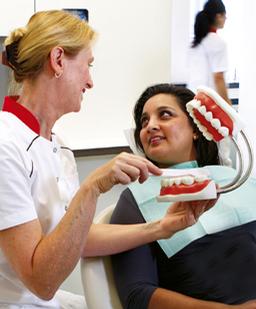
Dental hygienist explains to a patient how to brush teeth effectively
With good oral hygiene, you keep your teeth, molars and gums healthy. You will prevent inflamed gums (gingivitis and periodontitis) and promote their healing. But how do you know if your gums are healthy? And can you recognise inflamed gums?
Healthy gums
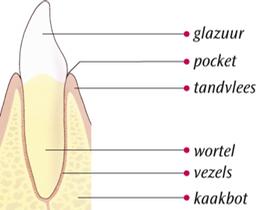 Healthy gums
Healthy gums are pink, tight around teeth and do not bleed when you eat or brush your teeth. Healthy gums are the foundation of healthy teeth. The gums, together with the jawbone and fibres, are the foundation of your teeth. Those who keep their gums healthy can enjoy their teeth for years to come.
Inflamed gums (gingivitis)
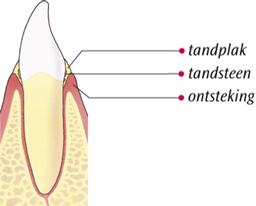 Inflamed gums (gingivitis)
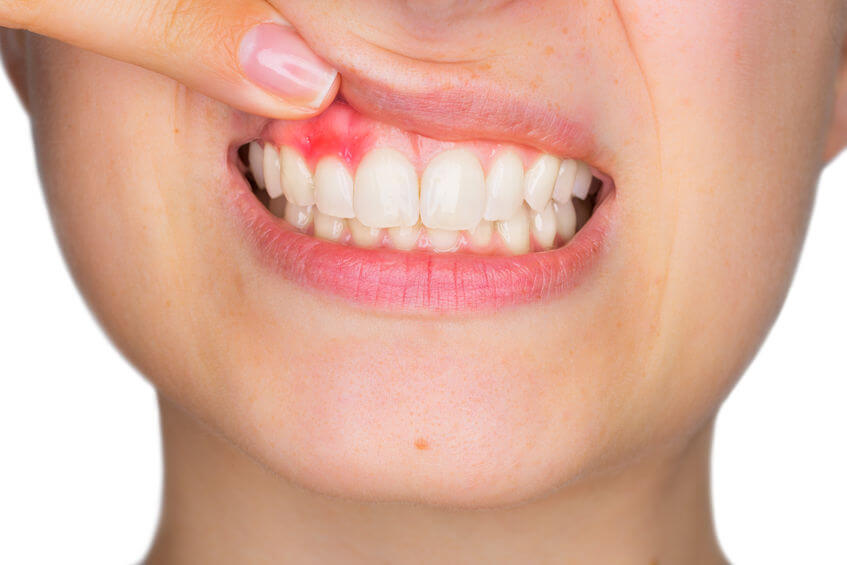
Bleeding, red or swollen gums usually indicate inflamed gums. Your gums can be inflamed all over. But the inflammation can also be localised, such as between 2 teeth. Inflamed gums are sometimes accompanied by a bad taste in the mouth or bad breath. It rarely hurts, but the gums can be sensitive when you touch them. You will notice this when you brush your teeth, use toothpicks, brushes or dental floss. Sometimes your gums are inflamed but nothing can be seen. Fortunately, your dental hygienist or dentist can diagnose the inflammation. Timely treatment of inflamed gums, can preserve your teeth.
What causes inflamed gums?
 You can buy plaque indicators at the chemist's.
Plaque on the transition from your gums to your tooth and the plaque that sits between your teeth cause inflamed gums. If you do not remove plaque properly, the bacteria in plaque cause your gums to become inflamed. Plaque that is not removed can harden and calcify into tartar. New plaque easily adheres to tartar. As a result, the gums become increasingly inflamed. Plaque is hard to see. A plaque indicator is a useful tool to make plaque visible.
Severe gum inflammation (periodontitis)
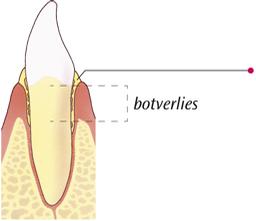 Periodontitis; dash indicates deepened pocket with plaque and tartar
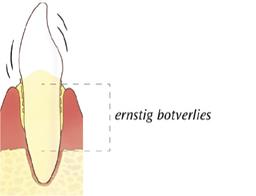 Periodontitis with severe bone loss
Inflammation of the gums can spread to the jawbone. Inflammation causes the gums to loosen from the teeth. The space (pocket) between the tooth and gums deepens. The inflammation in the gumline can spread to the jawbone. This causes the gums to loosen even further. The inflammation destroys the fibres and breaks down the jawbone. Result? Even deeper pockets. In these, plaque partly calcifies into tartar. The gums can start to recede. This progressive inflammation with destruction of fibres and jawbone is called periodontitis. Periodontitis is often not noticeable and can occur without proper
control go unnoticed for a long time.
Often, periodontitis is not noticed until the teeth become looser or the space between the
teeth becomes larger. As the gums are far receded, roots become exposed.
Exposed roots have no protective enamel. Also, teeth with exposed roots are sensitive. For example, when you brush your teeth or when you eat or drink hot, cold, sweet or acidic foods. Inflammation can cause so much jawbone to disappear that your teeth fall out.
How do you know if the inflammation is serious?
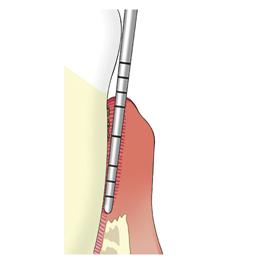 Pocket probe
At first glance, all inflamed gums look the same. To determine the severity of inflammation, the dentist or dental hygienist must measure the spaces between the teeth and gums (pockets). He does this with a so-called pocket probe on all teeth. By measuring each tooth, he determines the severity of the infection. In healthy gums, a pocket is no more than 3 mm and does not bleed. Inflamed gums produce pockets of up to 5 mm. More advanced inflammations have even deeper pockets, often of 6 mm or even more. Then there is also bone breakdown.
What should I do to make and keep my gums healthy?
Inflamed gums will only heal if you remove all plaque daily.
My gums are inflamed, how do I remove all plaque?

Good oral hygiene gets rid of all plaque. This involves more than brushing your teeth twice a day for 2 minutes with a fluoride toothpaste. Also clean the spaces between your teeth daily with toothpicks, brushes or dental floss. Good daily oral hygiene is the basis of healthy gums and a healthy mouth.
What can the dentist do about inflamed gums?
 Electric toothbrush
Your dentist or dental hygienist can give you advice and instructions on how to maintain and improve your oral hygiene. Good oral hygiene involves daily removal of plaque from your teeth in the places you can reach with a toothbrush, toothpicks, interdental brushes or dental floss. You cannot brush away tartar yourself. Your oral care provider does that with special instruments. This is called dental cleaning. Your daily efforts along with the professional dental cleaning in the oral care practice will be rewarded. The inflammation may disappear and healthy gums may reattach to the teeth. The gums may recede a little during healing. Once lost jawbone does not return. Those who remove all plaque daily prevent new inflammation.
Can I remove plaque with a mouthwash?

Some mouthwashes make plaque removal easier. Still, they cannot replace the use of a toothbrush combined with toothpicks, brushes or dental floss. Oral rinses can, however, provide a fresh mouth odour and pleasant taste for a while.
Is smoking harmful to my gums?
Smoking has adverse effects on your gums apart from the known health risks. Smokers' gums look paler and bleed less, even though they can still be inflamed. If you smoke, gums recover worse from inflammation. In smokers, the jawbone breaks down 2x faster than normal.
I am pregnant. Am I more likely to have inflamed gums?
During your pregnancy, you are more likely to develop gum disease. Due to the changed activity of your hormones, the gums react more violently to the presence of plaque. Extra attention to oral hygiene during your pregnancy is therefore very important. If you carefully remove all plaque, your pregnancy does not pose any additional risk of developing gum disease.
Does stress affect gum disease?
Everyone suffers from stress from time to time. Longer-lasting psychological stress can suppress the body's defences and thus also the gums. Those with high levels of stress are more likely to develop periodontitis. The consequences of periodontitis can also be more serious.
Does diabetes affect my gums?
A person with diabetes is more prone to inflammation and infection. So gums also inflame more quickly. This happens especially when diabetes is not well adjusted. People with diabetes, especially not well adjusted diabetes, have an increased risk of developing periodontitis.
Want to know more?
Then download the free GezondeMond app. The app is available for Android and tablets, available via Google Play. The app for iPhone and iPad can be found in the iTunes App Store..


<< Back© Ivory Cross