
Brushing teeth is the basis for good oral health
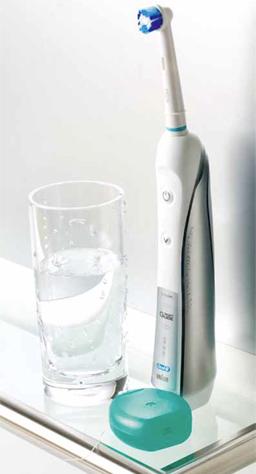
Good oral hygiene keeps your teeth, molars and gums healthy. Brushing teeth is the basis for this. But proper tooth brushing is a meticulous job and certainly not easy. Especially with an ordinary toothbrush, it often does not work well enough. Plaque easily remains on and between the teeth. This can cause cavities and gum infections. With an electric toothbrush, you can remove plaque in an easy way.
The electric toothbrush makes the right brushing motion for you, allowing you to concentrate better on the placement of the brush head in the mouth. Brushing with an electric toothbrush does not mean that dental care is otherwise ‘automatic’. Again, it is important that you handle the brush properly and proceed carefully. Brushing with an electric toothbrush makes cleaning between your teeth not redundant!
What types of electric toothbrushes are there?
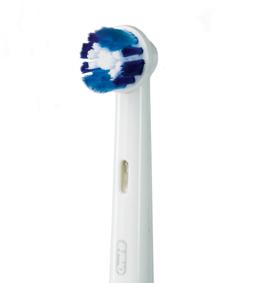 Rotating brush
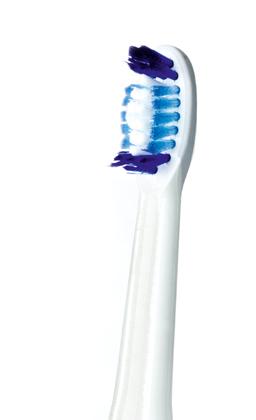 Sonic brush
There are essentially two types of electric toothbrushes. The technique of the brushes differs. These include oscillating-rotating (rotating back and forth) and sonic (sideways back and forth) technology. The rotating brushes have a small round brush head. This makes it easier to remove plaque in hard-to-reach places. They are the most popular and the most effective. Research shows that these brushes remove plaque better than normal manual toothbrushes. They thus ensure better oral hygiene. Pulsating technology has been added to the latest rotating brushes. Here, the brush head moves towards the tooth at a high speed. This allows the bristles to get between the teeth better.
The sonic brushes have the familiar shape of the regular manual toothbrush. The brushing technique is very similar to that of the regular toothbrush. The brush moves quickly back and forth, making a sideways brushing motion.
Which electric brush should I choose?
There are lots of different types of electric toothbrushes on sale. That often doesn't make choosing any easier. First, choose a brush head. Do you want to brush with a small round brush head? Or do you prefer the familiar elongated shape? Actually, you are now making the choice of the rotary or sonic system. In any case, choose a battery-operated electric toothbrush. They function better than the battery-operated variants. The battery-operated ones are less effective. They make a limited number of brushing movements and the battery power is low. Battery-powered brushes are a handy alternative for holidays, though. Almost all battery-powered electric toothbrushes have a timer. This is handy because it signals after two minutes of brushing that you have brushed long enough. Some brushes give a signal after thirty seconds, so you know you can change planes. Choose a brush you are comfortable using. You will brush better with it and you are less likely to cause damage to your teeth or gums. The best toothbrush is the one you enjoy using!
Also see: www.oralb.nl
What should I brush with?
Use a brush with soft bristles. Replace it as soon as the bristles stand apart and protrude outside the brush head. A new brush head removes more plaque than a brush in need of replacement. Brush your teeth twice a day with fluoride toothpaste. Whether you brush electrically or simply: on the advice of your dentist or dental hygienist, also clean the spaces between your teeth with interdental brushes, dental floss or toothpicks. Choose the aids in consultation with your dentist or dental hygienist.
How should I brush with an electric toothbrush?
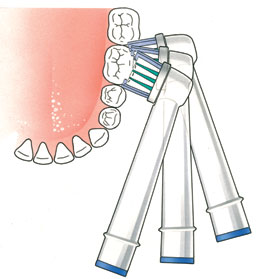 Follow the shape of your teeth
Below is clear brushing instruction for the rotary system. The brushing technique for the sonic version differs from this. Please refer to the user manual of your electric toothbrush for this.
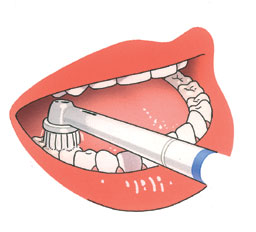
Place the brush at a slight angle on the tooth surface just over the gumline. Apply little pressure. As soon as the brush makes contact with the tooth surface, the brush already cleans. Hold the brush still on the tooth for a few seconds so that the brush also gets between your teeth. The brush itself makes the brushing movement. Only move the brush to move it to the next tooth. In doing so, follow the shape of your teeth. Will you be brushing electrically for the first time? Ask your dentist or dental hygienist for brushing instructions.
Electric brushing instruction
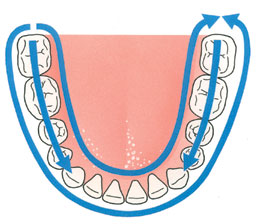 Keep a fixed cleaning order
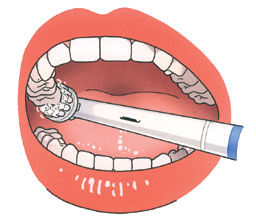 upper jaw-back
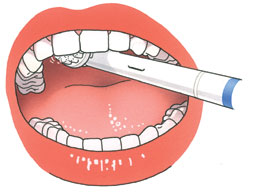 Upper jaw-inside
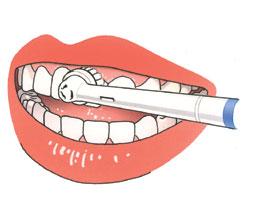 Upper jaw-outside
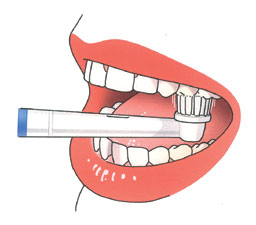 Upper jaw-top
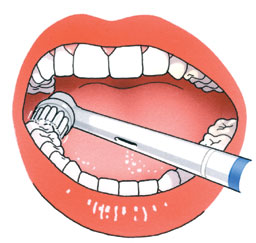 Lower jaw back
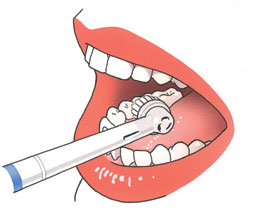 Inner lower jaw
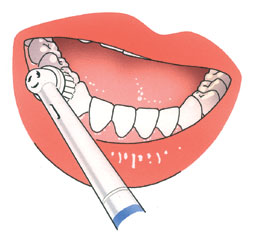 Lower jaw exterior
 Lower jaw on top
Keep a fixed brushing order. Always start at the inside of the lower jaw and brush it completely. Brush the back of the last molar carefully first. Move the brush up one tooth at a time. Make sure you place the brush head deep between your molars and your tongue. Otherwise, the bristles of the brush won't touch your molars properly and the edge of the gums won't get clean. Then brush the entire outside of the lower jaw. Again, do this tooth by tooth. Next, brush the top of the molars (the chewing surfaces). Again, brush tooth by tooth. Then brush the inside of the upper jaw in the same way, followed by the outside and finally the top again.
Is an electric toothbrush better than a regular toothbrush?
Yes, research has shown that rotating electric toothbrushes remove plaque better than normal manual toothbrushes. They thus provide better oral hygiene.
Does the electric toothbrush also clean between my teeth?
If you use the rotary electric brush properly, it will partially get between your teeth. Electric brushing does not make cleaning those gaps unnecessary! Therefore, on the advice of your practitioner, also clean the spaces between your teeth once a day with interdental brushes, dental floss or toothpicks.
What toothpaste should I use if I brush electrically?
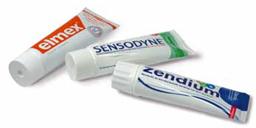 Use a non-abrasive toothpaste
Also, with an electric toothbrush, brush your teeth twice a day with a fluoride toothpaste.
Can an electric toothbrush damage gums or tooth enamel?
When used correctly, the electric toothbrush cannot damage your gums or tooth enamel. If you use the wrong brushing method, brush too vigorously or use a highly abrasive toothpaste, you can damage your gums and tooth enamel. But this also applies to using a regular toothbrush. This can happen even if you use a brush with soft bristles. Therefore, take your brush to the dental office and ask your dentist or dental hygienist for brushing instructions.
Can I only brush electrically?
Yes, you can only brush your teeth electrically. In addition, would you still like to continue brushing manually? Then brush once electrically and once a day with a regular toothbrush, for example.
Is an electric toothbrush also suitable for children?
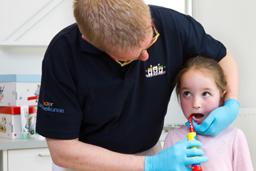
Yes, as soon as children can hold a toothbrush, they can also brush electrically. There are special electric toothbrushes and brush heads for children. These are smaller and therefore suitable for children's mouths. Brushing with an electric toothbrush is actually fun for children. It can help motivate them to take good care of their teeth. Especially for parents, the electric toothbrush is a useful tool. With the electric toothbrush, parents can easily and properly re-brush. Supervise your child when brushing their teeth until they are 10 years old. This applies to both electric and regular toothbrushes.
Who is electric brushing suitable for?
Electric brushing is suitable for everyone. Many people struggle to brush their teeth properly and often skip cleaning between the teeth. This is when a rotary electric brush can be effective. The electric brush can be a very practical tool for people with rheumatism, gagging tendencies or disorders of fine motor skills, for example. Do you need to brush the teeth of your child, resident or patient, for example? Even then the electric brush can be a solution.
Does electric brushing have any drawbacks?
The vibration of the brush is sometimes perceived as unpleasant, but you often get used to it after a while. Also, the electric toothbrush is more expensive than a regular brush. This applies both to the purchase of the toothbrush and to the replacement of the brush heads. The handle of an electric toothbrush contains a complicated piece of technology. If the brush falls on the floor, it can break.
The benefits of rotary electric brushing
- The electric toothbrush makes the right brushing motion for you, allowing you to fully concentrate on properly positioning the brush head.
- The brush head is small. This makes it easier to reach the hard-to-reach places in your mouth.
- If you use the electric brush correctly, you will remove more plaque on and between your teeth and along the edge of the gums than with a regular toothbrush.
- Electric brushing is easy and less tiring. As a result, you are likely to take more time to brush. Timers help with this. They signal after two minutes.
- With an electric toothbrush, you usually brush for longer, which also makes your teeth cleaner.
Want to know more?
Then download the free GezondeMond app. The app is available for Android and tablets, available via Google Play. The app for iPhone and iPad can be found in the iTunes App Store..