
Brush the teeth of children up to 10 years after
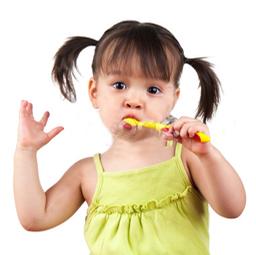
Usually, children want to brush their own teeth at a very young age. That is fine. Encourage that above all. But they do not yet brush everywhere equally well. That is why help is needed! Brushing your teeth properly doesn't happen by itself, a child has to learn it. The information applies to children up to 12 years old.
Cleaning... and more cleaning
Children up to about 10 do not yet clean their teeth very well. So brush the teeth of children up to that age at least once a day, even if your child brushes electrically. By brushing again, you also make it clear how important this daily care is. In this way, brushing teeth becomes a good habit. Even after the age of 10, it is still important to supervise and monitor brushing.
Brush twice a day for 2 minutes
It is important for everyone, including (small) children, to brush their teeth for 2 minutes twice a day. Brush in the morning after breakfast and in the evening before going to bed. For small children, brush in the morning and in the evening (after). Also let your child brush his teeth himself, of course he has to learn! When children are ready, let them brush on their own in the morning, for example. In any case, brush after in the evening. From 10 years of age, most children can brush independently, but supervision of whether and how this is done is still important.
Brushing children's teeth, what do you do it with?
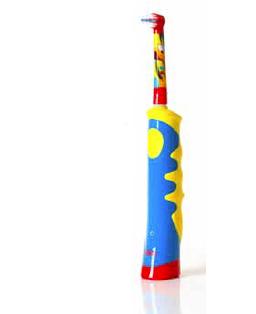 Electric toothbrushes for children have a special small brush head
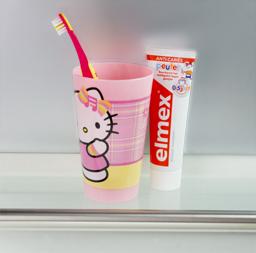
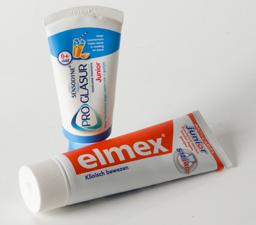
Use a toothbrush with a small brush head with soft bristles. This way you can easily reach everything. As soon as children can hold a toothbrush, they can also brush electrically. There are special electric toothbrushes and brush heads for children. They are smaller and therefore suitable for children's mouths. Brushing with an electric toothbrush is not better but can help motivate them to take good care of their teeth. Choose a toothpaste with fluoride. Fluoride helps strengthen enamel.
There are special toddler toothpastes for children up to 4 years old. These contain less fluoride. For children aged 5 and over, use fluoride adult toothpaste. You can also use toothpaste that says ‘child’ or ‘junior’. In that case, always look at the age indicated (e.g. 5-12 years).
Brushing children's teeth, how do you do it?
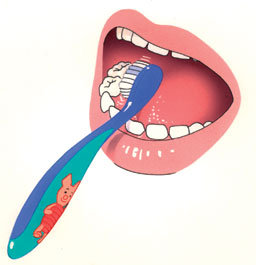 Start with the Inside
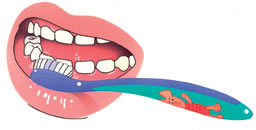 Then clean the outside
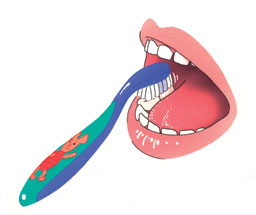 and then on top (the chewing surfaces)
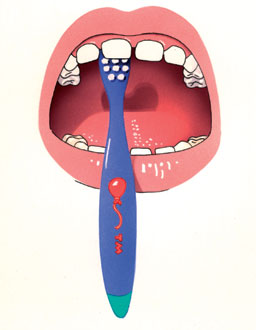 Start again on the inside first
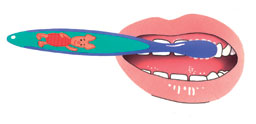 Clean the outside
.jpg) And finally, on top of that
And finally, on top of that
Place the toothbrush directly on the teeth. Brush gently and make short horizontal movements. This way, you brush away harmful plaque. Following a fixed order will teach your child to brush systematically. This way there is less chance of skipping spots. Always brush along the edge of the gums. Start at the back of the molars and go through the teeth to the molars on the other side. Take your time. The same applies to brushing with an electric brush. Only you don't have to make any brushing movements yourself. Move the brush slowly over the teeth. Brush even after your child uses an electric toothbrush.
Brush in a set order according to the 3 Bs: Binnen side, Bout side and Boven side.
First brush the teeth in the lower jaw.
Then brush the teeth in the upper jaw
What is the correct brushing posture when brushing children?
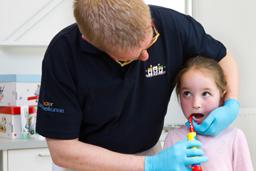
Make sure you have a good view into the mouth and there is enough support for your child's head when you brush (after). Try out which brushing position is most comfortable for you. Small children can also be brushed on your lap or, for example, lying on the changing mat or bed.
Stand diagonally behind your child. When you support the chin with your hand, the head rests against your upper body. Bend over your child slightly, so you can clearly see where you are brushing.
Or
Stand in front of your child and let them rest their head against the wall, for example. Support the chin with one hand while brushing with the other. This way you can clearly see where you are brushing
Brushing tips when brushing with children
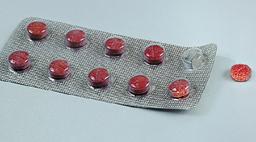 You can buy plaque indicators at the chemist's.
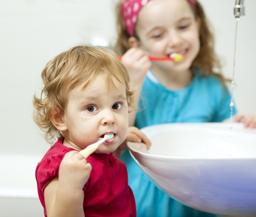
- Use a (toddler) toothbrush with a small brush head and soft bristles. Do not press too hard.
- Use fluoride (toddler) toothpaste.
- Make brushing your teeth fun. While brushing, you can tell a story, sing a song, count or turn on music. Several brushing songs can be found (on-line). Choose something that lasts 2 minutes!
- Make brushing teeth more appealing. For example, let your child choose their own toothbrush or put the toothpaste on the brush themselves.
- Be careful not to hurt children while brushing. For example, the lip band under the upper lip and the part of the jaw at the back of the mouth are very sensitive.
- During tooth breaking and molting, there are sensitive spots in children's mouths. Be careful, but keep brushing.
- Dental plaque detectors allow you to check whether the teeth have been brushed properly. They can be bought at the drugstore.
Set a good example yourself. Brush twice a day for 2 minutes.
Want to know more?
Then download the free GezondeMond app. The app is available for Android and tablets, available via Google Play. The app for iPhone and iPad can be found in the iTunes App Store..
© Ivory Cross