
Is your breath fresh?

Fresh breath. Everyone wants that. But is your breath fresh too? Most people with bad breath, also known as halitosis, don't notice it themselves. They don't smell it themselves. But those around them do notice it. Some people with bad breath are so bothered by it that they
are hindered by it in their social and intimate contacts. There is a simple and reliable way to find out if you suffer from bad breath. Ask your partner, another trusted person, your dentist or dental hygienist.
Bad breath or halitosis

A good or bad taste in the mouth says nothing about bad breath. A person may temporarily smell from his mouth, for instance from eating spicy food, drinking alcohol or smoking. But a person with halitosis always smells out of his mouth. The cause has little or nothing to do with what you eat or drink. The main culprits are tooth or gum disease, the presence of bacteria and food debris in the mouth. The bacteria produce sulphur, which smells unpleasant. To diagnose halitosis, a diagnosis from the dentist or dental hygienist is needed. This form of bad breath occurs in about one in seven people. Halitosis does not go away by itself and can be remedied in most cases.
What are the causes of bad breath and what can you do about it?
 Choose sugar-free chewing gum
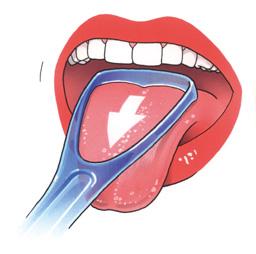 Place the tongue cleaner as far to the back of the tongue as possible

Food, drinks and smoking
Anyone who has eaten garlic, onions or herbs, drunk alcohol or smoked, for example, may exhale an unpleasant odour. This smell is temporary and you can prevent or mask it.
Solution:
To avoid the unpleasant smell,you should not use the products. To temporarily mask the unpleasant odours, you can eat or drink something, such as sugar-free gum or brush your teeth with a refreshing toothpaste.
Inflamed tooth or gums
Often, an inflamed tooth or gums is the cause of bad breath. The inflammatory bacteria produce an unpleasant sulphur smell. If you do not properly remove plaque on and between your teeth, not only do you have a greater chance of getting cavities, but your gums also become inflamed. Plaque that is not removed can harden and calcify into tartar. Tartar easily attracts new plaque, which can make your gums increasingly inflamed. The bacteria between your teeth can also cause an unpleasant sulphur smell.
Solution:
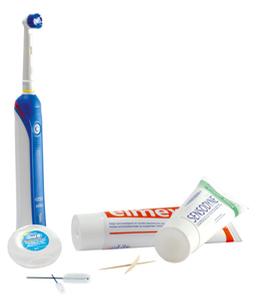
With root canal treatment, the dentist can fix the inflammation in the tooth. You can prevent inflamed gums if you brush your teeth with fluoride toothpaste for two minutes twice a day. In addition, clean the spaces between your teeth once a day with interdental brushes, dental floss or toothpicks. Ask your dentist or dental hygienist for proper brushing instructions. An extensive dental cleaning may also be required by the dentist or dental hygienist.
Bacteria on the back of the tongue
On the back part of the tongue, bacteria and food debris (tongue coating) are present. The bacteria produce sulphur, which smells unpleasant. On rough tongues, food debris remains more easily than on smooth tongues. A person with a rough tongue is more likely to have tongue seizures and thus halitosis. Older people have more tongue bite than younger people.
Solution:
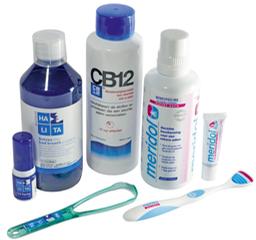
Clean your tongue daily with a tongue cleaner. Scrape the tongue brush off your tongue in about five passes. Scrape across the entire width of the tongue, i.e. in the centre and on the left and right sides of the tongue. The further you get to the back of your tongue, the more you can remove. Clean your tongue twice a day, preferably in the morning and at night. Research shows that cleaning the tongue with a tongue cleaner is more effective than with a toothbrush. Does tongue cleaning produce insufficient results? Then additional care is needed. Sometimes, in addition to tongue cleaning, you may need to fight the bacteria causing your bad breath with a mouthwash, gargle and/or a mouth spray. Tongue cleaners, mouth rinses, gargles and mouth sprays are available without a prescription.
How to use a tongue cleaner or scraper?
- Stick your tongue out of your mouth as far as possible.
- Place the tongue cleaner as far to the back of your tongue as possible. Apply force to the scraper and press your tongue flat. Make sure the tongue cleaner makes good contact with your tongue. At first, you will gag at this point. If you do it more often, you will learn to position the cleaner so that you minimise a gagging reaction.
- Slowly pull the tongue cleaner forward into your mouth.
- Clean the cleaner under running water.
- Repeat the procedure about five times.
- Rinse your mouth thoroughly with water.
- Clean and dry the tongue cleaner and store it until next use.
Dry mouth
Bad breath is common in people with dry mouth. Mouth dryness can be caused by insufficient saliva production or result from breathing through the mouth. Certain medications have dry mouth as a side effect.
Solution:
Take your dry mouth symptoms to your dentist or dental hygienist. Your practitioner will give you tailored advice to minimise your symptoms if possible. Those with dry mouth would do well to drink water regularly.
Other causes of bad breath
Sometimes chemical processes in the blood make the air coming from the lungs smell unpleasant. A person then smells from both the nose and mouth. Bad breath can also occur with perfect oral hygiene. An inflammation in the throat or nasal sinus may be the culprit. An assessment by an ENT specialist is then required. Many people think that a bad smell comes from the stomach. But this is almost never the case.
Solution:
See your dentist or dental hygienist for advice. He can determine your breath odour and determine whether a referral to a GP or specialist is necessary.
What doesn't help against halitosis?
Halitosis will not go away with fresh candies, chewing gum or sprays. These only leave a nice minty taste. Because of the taste, you may feel that your breath is fresh, but that feeling is deceptive. Refreshing your mouth can only partially cover up your bad breath and usually only for a few minutes. Nor does it help you brush more often and harder. Mouthwashes that are not expressly designed to fight bad breath do not help either.
Tips for fresh breath

Taking good care of your teeth, gums and tongue is important to prevent or fight bad breath.
- Brush your teeth twice a day with fluoride toothpaste.
- Also clean the spaces between your teeth once a day with dental floss, toothpicks or brushes.
- Use a tongue cleaner twice a day if you have a lot of tongue bite, possibly together with a mouthwash, gargle or mouth spray.
- Also, visit your dentist or dental hygienist regularly for check-ups. They will, if necessary, clean your teeth thoroughly or treat an inflamed tooth.
- Stop smoking.
Want to know more?
Then download the free GezondeMond app. The app is available for Android and tablets, available via Google Play. The app for iPhone and iPad can be found in the iTunes App Store..


<< Back© Ivory Cross