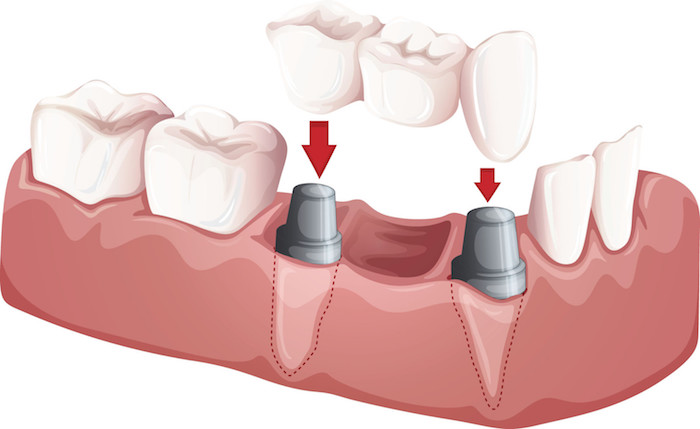
Crowns and bridges. Durable replacements for teeth
Crowns and bridges are intended as durable replacements for teeth. They approximate the original shape and function as much as possible. Treatment for a crown or bridge is more complicated than for a regular filling. You will therefore need to return to your dentist several times.
What is a crown?
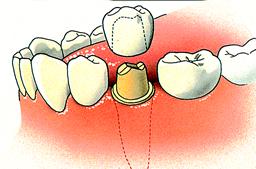 Crown, a cap over a tooth
A crown is a cap made of metal and/or porcelain that fits precisely over a chipped tooth. The cap is glued to the tooth. A crown restores the tooth to its original shape and function.
When might a crown be needed?
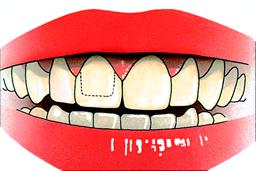 A crown over a front tooth
1. There is insufficient retention for a filling. Due to tooth decay, a large part of the tooth may have been lost.
2. Improving appearance. This usually involves discoloured and/or badly shaped teeth or molars at the front of the mouth.
What is a bridge?
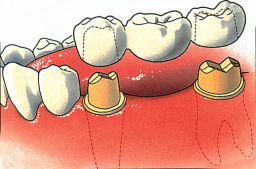 Bridge, two crowns fitting the piers and a bridge intermediate section
A bridge is made to replace one or more missing teeth and/or molars. A bridge is attached to two or more pillars. These are ground-down teeth or molars on either side of the open space of the missing tooth. A bridge consists of two or more crowns that fit onto pillars and a bridge abutment, also called a ‘dummy’. This consists of one or more artificial teeth and/or molars that come in place of the open space.
When might a bridge be needed?
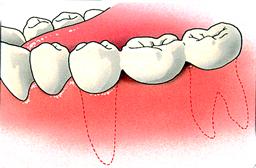
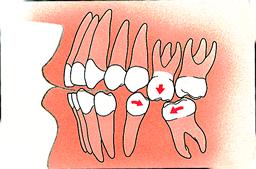 Lateral view of a jaw: outgrowth and misalignment of molars
1. To chew better.
2. Improving appearance.
3. To prevent teeth misalignment and/or outgrowth.
If teeth are missing, the teeth of the other jaw may grow towards the open space. Also, the teeth on either side of the open space may grow towards each other, causing them to become crooked.
What types of bridges are there?
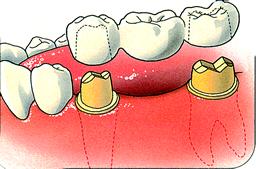 Ordinary bridge
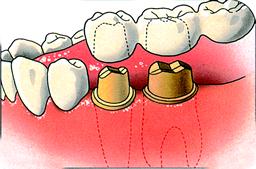 Free-ending bridge
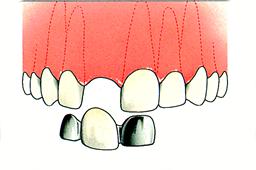 Etching Bridge
Ordinary bridge
In an ordinary bridge, the piers are on either side of the open space.
Free-ending bridge
In a free-ending bridge, the pillars are on one side of the missing tooth.
Etching Bridge
An etch bridge is usually possible when the teeth on either side of the open space are almost flawless. This construction hardly requires any grinding off of the intact teeth. The etch bridge is mainly used to replace one or two teeth. The bridge is glued invisibly to the inside of the teeth by means of metal attachment plates with a special glue. An etch bridge, if necessary, can usually be removed quite easily.
What material are crowns and bridges made of?
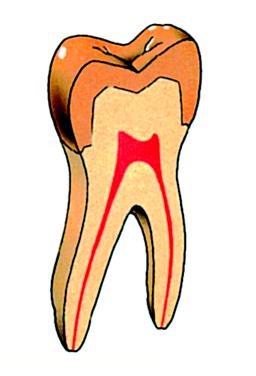 Crown of metal
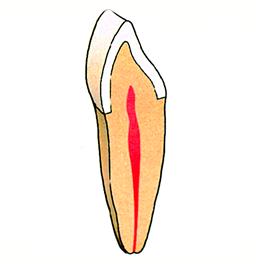 Crown of porcelain
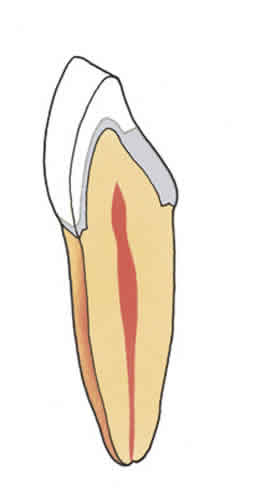 Metal-porcelain crown
Porcelain
Crowns made of porcelain can be used in many situations. New techniques eliminate the risk of fracture. The material is tooth-coloured and looks very natural.
Metal-porcelain
In this process, metal is used as the base. For appearance, a layer of tooth-coloured porcelain is applied over the visible metal.
Metal
Sometimes crowns and bridges are made of metal only. This material is very strong and hard-wearing. They are then given a gold or silver-coloured gold alloy. Because of the colour, the dentist only places them in the back of the mouth.
What is the procedure for a crown or bridge?
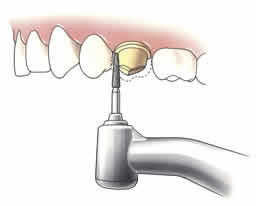 Grinding off the tooth
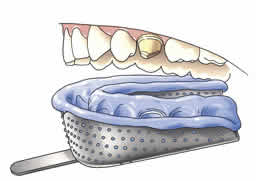 Impression tray with impression material
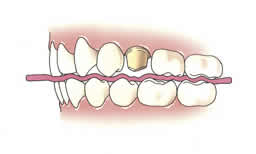 Wax plate for bite registration
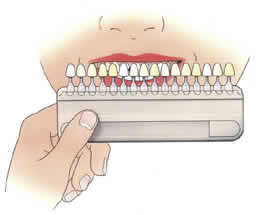 Define colour
 Fixing with quick-setting cement
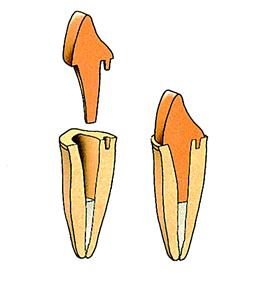 Construction
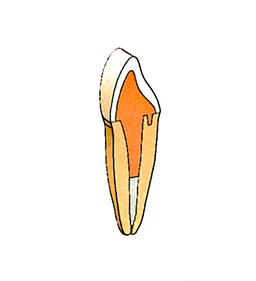 Crown over construction
Treatment for a crown or bridge takes place in stages. This requires two or three visits to your dentist. A crown or bridge is not made directly in your mouth, but in a dental laboratory. This takes about one to two weeks.
The treatment in steps
Grinding off the tooth
First, part of the tooth is ground off until there is enough space to make a crown or bridge. If necessary, you will be given a local anaesthetic.
Print
Next, the dentist takes an impression of your entire jaw or the area where the abraded molar is located. To do this, the dentist inserts an impression tray containing a rubbery mass into your mouth. This creates an impression into which plaster is later cast in a dental laboratory. The crown or bridge is made on this plaster model.
Bite registration
With bite registration, the dentist determines how the teeth of your lower and upper jaw fit together. This requires an impression of the opposite jaw. For this, the dentist uses a wax plate.
Define colour
If the crown or bridge is at the front of the mouth, it usually has a tooth-coloured outer layer. Together with your dentist, you will choose a suitable colour.
Emergency facility
For your comfort and to protect the chipped tooth , the dentist will make an emergency device (temporary crown). Do not eat any hard or sticky products with it. The temporary crown is not designed for that. If the temporary crown breaks or becomes loose, contact your dentist.
Fix
At the last appointment, your dentist fits and secures the crown or bridge in your mouth. On the inside of the crown or bridge, he applies a quick-curing cement. He then slides the crown or bridge into place and presses it down firmly.
Construction
If your tooth does not have enough hold for a crown or bridge, your dentist may first make a buildup. He glues the superstructure into the root canal with a pin. Then he places the crown or bridge over the superstructure.
Maintenance of crowns and bridges
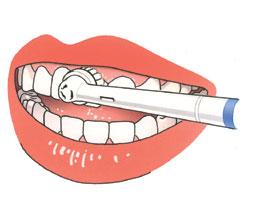 Brush with a soft toothbrush
Daily oral hygiene is especially important with crowns and bridges. You should especially clean the gums around the crown or bridge. A vulnerable area is the edge of the crown or bridge. Plaque can easily remain there. Plaque causes cavities along the edge of your crown or bridge and inflammation of the gums. Brush this area carefully with a soft toothbrush and use toothpicks, interdental brushes and/or dental floss. Your dentist or dental hygienist can advise you on this.
How long does a crown or bridge last?
The materials are so durable that a crown or bridge will last at least ten years. Good oral hygiene has a great impact on durability. Of course, an accident can cause premature damage to a crown or bridge.
Will I suffer from post-operative pain during treatment for a crown or bridge?
After placement, a tooth fitted with a crown or bridge can sometimes be sensitive. This is usually temporary. Consult your dentist if the sensitivity persists or becomes more severe.
What does a crown cost?
The cost of a crown depends on the type of crown, the material used and the cost of the dental laboratory. In addition, it matters whether a build-up is needed. Ask your dentist for an estimate in advance.
What does a bridge cost?
The cost of a bridge depends on the type of bridge and the number of teeth to be replaced. An etch bridge is often cheaper than a regular bridge. Again, ask your dentist for an estimate in advance.
Are crowns and bridges covered by insurance?
Reimbursements vary according to your insurance policy. Your health insurance policy will tell you which reimbursements you are entitled to.
Want to know more?
Then download the free GezondeMond app. The app is available for Android and tablets, available via Google Play. The app for iPhone and iPad can be found in the iTunes App Store..